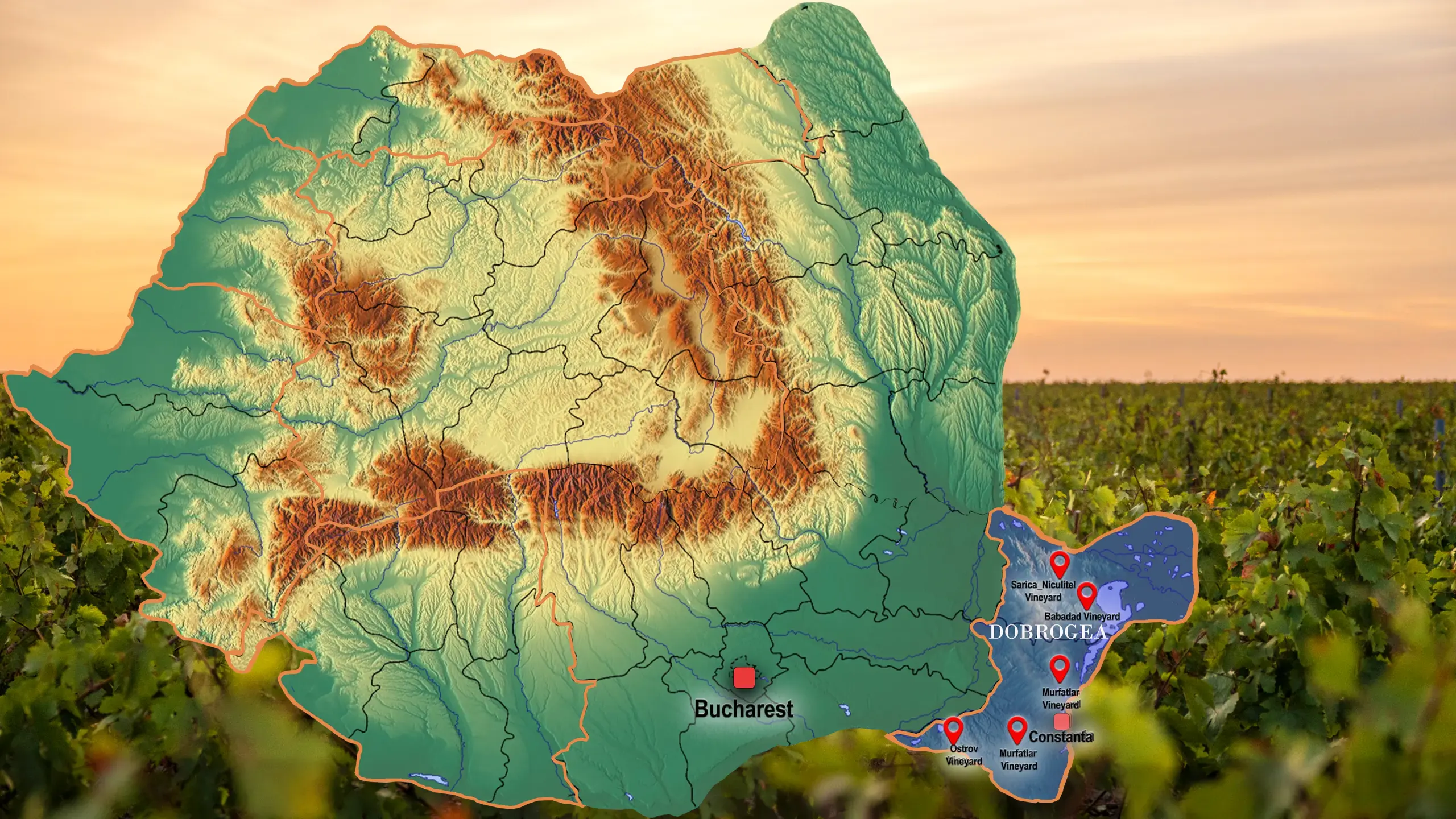
The poet Ovid, during his exile in the fortress of Tomis, modern-day Constanta, under the rule of Roman Emperor Octavianus Augustus, eloquently captured the cultural and viticultural importance of the region in his literary works. Tomis and its surroundings have since evolved into a hub of renowned vineyards, with Murfatlar, Sarica Niculitel, and Babadag emerging as focal points of viticultural excellence.
The favorable climatic conditions in the Dobrogea Hills Viticultural Region, which stretches from the Black Sea to the Danube Delta, make this area the third-largest wine region in Romania. It ranks behind the Moldavian Hills and the Muntenia Hills and Oltenia Hills regions. The extensive vineyard landscape of the Dobrogea Hills spans almost 25,000 hectares, with approximately 15,000 hectares devoted to white grape varieties and the remaining 10,000 hectares to red varieties.
Historically known for its sweet wines, the Dobrogea wine region has undergone a renaissance, bringing new life to its sun-drenched vineyards. Historic wineries such as Murfatlar and Via Viticola Sarica-Niculitel stand alongside a growing number of new establishments, collectively contributing to the region's revival as one of Romania's main wine-producing areas. In recent years, there has been a shift towards ecological and biodynamic plantations, positioning Dobrogea as a leader in progressive and sustainable winemaking practices.
The most cultivated white grape varieties in Dobrogea include Aligote, Feteasca Alba, Feteasca Regala, Pinot Gris, and Chardonnay, while for reds, Cabernet Sauvignon, Pinot Noir, Merlot, and Sangiovese are among the most prominent, reflecting the region's commitment to diversity and quality.